Three years of pad management because nobody told you the pelvic floor is a muscle that responds to correct training at any age. Nobody told you the bladder urgency response is a learned behaviour that retrains with structured practice. Nobody told you the leaking is not what getting older means. It is what getting older means when nobody told you it could be fixed. Now you know. The muscle is about to be trained. The bladder is about to relearn. The daily secret is about to end.
The pelvic floor remembers how to hold. 21 days of correct practice. The pad becomes unnecessary.
💪 "The pelvic floor is a muscle. Muscles strengthen with correct training at any age. The bladder urgency response is a learned behaviour. Learned behaviours retrain with structured practice. The leaking is not permanent. It is not what getting older means. It is a fixable condition. Mama Nnenna's method gives me the correct technique to train the right muscle group, the structured protocol to retrain the urgency response, and the botanical support to restore pelvic tissue tone. In 21 days, the pad becomes unnecessary. Not managed. Unnecessary."
Your Complete Remedy Is Ready
Click the button below to download the full remedy and both bonus guides instantly.
Download Your Guides Now💪 Here's What You Got
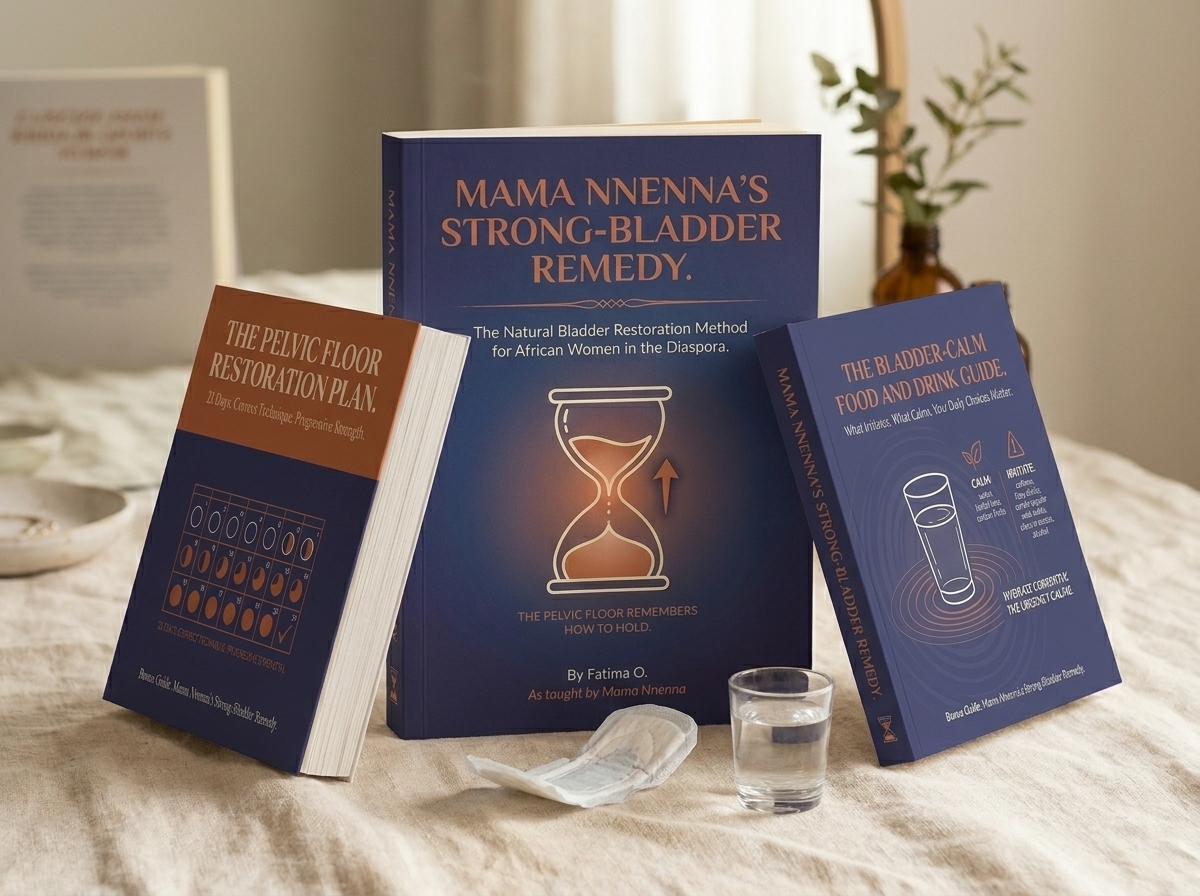
The complete 3-part method: pelvic floor restoration programme (correct technique, technique verification, 21-day progressive loading), bladder retraining protocol (structured urgency extension from 30 seconds to 10-15 minutes), and traditional botanical support (pelvic tissue tone, bladder irritation reduction). Under £15/month for ingredients
21-day progressive exercise programme with technique verification at every stage. How to identify whether you are engaging the correct muscles. Quick-contraction exercise for stress leakage. Slow-hold exercise for urgency control. Progressive loading schedule Weeks 1-8
Specific foods and drinks that irritate the bladder and increase urgency frequency. The correct daily water intake that reduces urgency rather than increasing it. Which popular diaspora drinks are among the worst bladder irritants. The daily hydration schedule that supports bladder retraining
Your First 48 Hours
Download Everything Now
Tap the button above. Save all 3 files. You'll reference the main remedy, the restoration plan, and the food guide daily for the next 21 days.
Read the Bladder-Calm Food and Drink Guide Tonight (Bonus #2)
Start here FIRST. The single fastest change you can make tonight. Open Bonus #2 and go directly to the bladder irritants list. Most women find 2-3 things they consume daily that are actively worsening the urgency: caffeine (coffee, tea, many fizzy drinks), alcohol, and highly acidic or spicy foods all stimulate the bladder wall and increase the frequency and urgency of the need to urinate. Identifying and reducing these irritants tonight can produce a measurable reduction in urgency frequency within 3-5 days — before the pelvic floor exercises have had time to build strength.
Read the Pelvic Floor Restoration Plan (Bonus #1)
Open Bonus #1 and read the technique verification section carefully before attempting your first exercise. This is the most critical step. Research consistently shows that many women performing pelvic floor exercises engage gluteal or abdominal muscles instead of the pelvic floor — meaning years of effort trains the wrong muscle group. The verification method in Bonus #1 confirms you are engaging the correct muscles before you begin. Do the verification test tonight, even before starting the exercises properly tomorrow.
Read the Main Remedy
The main guide explains the complete 3-part system. Read it in full before beginning the 21-day protocol so you understand the clinical reasoning behind each component. Understanding WHY the technique verification matters, WHY the bladder retraining protocol works, and WHY the botanical preparation supports tissue tone will keep you consistent when Day 7 arrives and the results aren't visible yet.
Begin the Bladder Retraining Protocol Immediately
You can start the bladder retraining protocol from Day 1 even before the pelvic floor exercises produce strength improvement. When an urgency signal arrives, resist it by 5 minutes before going to the toilet. Not 30 minutes. Not holding until it's uncomfortable. Just 5 minutes longer than the urge demands. This small resistance begins retraining the bladder's urgency threshold immediately. The urgency window — currently 30 seconds for many women — will begin extending from your very first day of practice.
Be Patient With the Exercise Timeline
The pelvic floor is a muscle group. According to established physiotherapy guidelines, pelvic floor muscle training typically requires a minimum of 8-12 weeks of consistent correct exercise to produce clinically meaningful strength improvement. What you will notice first (Weeks 1-3) is neural pathway development: your brain learning to recruit the correct muscles. Strength follows neural recruitment. Most women notice a meaningful reduction in stress leakage (from coughing, sneezing, and laughing) around Weeks 4-6 of correct practice. Do not judge the programme by Week 1 results.
💪 What to Expect
⚡ Do This Right Now
Open the Bladder-Calm Food and Drink Guide (Bonus #2) and go to "The 3 Fastest Changes."
These are 3 changes you can make tonight that will begin reducing urgency frequency within 3-5 days, before the pelvic floor exercises have had time to build strength. First: reduce or eliminate caffeine after 2pm (caffeine is a known bladder irritant and diuretic, stimulating both increased urine production and bladder wall irritability). Second: stop reducing your water intake — concentrated urine irritates the bladder wall and worsens urgency. Drink 6-8 glasses of still water daily, spread across the day, with the last glass no later than 7pm. Third: check whether you're consuming any of the 5 common diaspora drinks listed in the guide that are among the highest bladder irritants — some will surprise you.
"The pelvic floor is a muscle. The bladder is a learned behaviour. Both respond to correct, consistent practice. The leaking is not permanent."

💪 21-Day Conditional Guarantee
Follow the method consistently for 21 days. If you don't notice meaningful reduction in leakage episodes and urgency frequency, full refund. You keep both guides regardless.
Need Help?
Questions about technique verification, the bladder retraining intervals, the botanical preparation, or anything at all? Woman to woman. Private and confidential.