
Every morning before anything else.
The pad.
You put it on before you know what the day will bring. Before you know if you'll need it. You put it on because the alternative — being caught without it — is unthinkable. A sneeze at your desk. A cough in a meeting. Laughing at something a colleague said. Any of these, without the pad, means wet clothes and the slow, humiliating walk to the bathroom to manage what nobody must find out.
So the pad goes on. Every morning. A secret you carry into every room.
You've restructured your day around the pad. You know where every bathroom is in every building you enter. You sit at the end of rows in church so you can leave quickly if you need to. You stopped wearing light-coloured trousers. You declined the long drive to your friend's party because 2 hours on the motorway without a guaranteed bathroom stop is a risk you've learned not to take. You drink less water than you should because less in means less urgency. Your GP told you to drink more water. You nod and drink less anyway.
You've built an entire parallel life around the pad. A secret architecture of bathroom proximity, clothing choices, and social withdrawal. And nobody knows. Because the shame of bladder leakage is one of the most private shames that exists. You are a competent, capable woman whose body has started to betray her in the most undignified way imaginable. And you are managing it alone.
If the pad is the first thing you put on every morning, if you've mapped every bathroom in every building you regularly enter, if you've quietly withdrawn from activities that put you too far from a toilet, if you've told nobody because the shame is too deep to share, keep reading.
My name is Fatima. I'm 47. I live in Manchester. I teach secondary school.

And for 3 years, the pad was my daily secret. Until a 74-year-old retired midwife named Mama Nnenna showed me what the GP's referral to physiotherapy and the pad manufacturers both missed: the pelvic floor can be retrained. The bladder can relearn control. The leaking is not permanent. It is a fixable condition that most African women manage in silence because the shame is too great to seek help.
The Gym Incident I Still Think About
February 2024. A fitness class. I had joined a gym in January as a resolution. Eight weeks in, I was actually enjoying it. A HIIT class. The instructor called for jumping jacks.
I had worn the pad. I thought the pad would hold.
It didn't hold.
I felt the leak before I could stop it. Not a small one. A real leak. Through the pad, through my leggings. I was in the second row of a class with 12 people. I kept jumping for 4 more seconds because stopping suddenly would draw attention. Then I stopped, picked up my bag, said I felt unwell, and walked out.
I drove home. Sat in the car. Did not cry. Cried.
I haven't been back to that gym. I haven't been to any gym. The pad had promised containment. It delivered shame instead. I had done everything right: worn the pad, chosen an exercise class, tried to maintain my health. And my body had publicly humiliated me anyway.
That evening I sat in my bathroom and made a decision: I could either accept that this is now my life — pads, bathroom mapping, social withdrawal, the daily secret — or I could find something that actually addressed the leaking instead of containing it. Because the pad doesn't fix anything. It just hides the problem while the problem gets worse.
Three Years of Managing Without Fixing
The leaking began at 44. Perimenopause, my GP said. "The oestrogen decline weakens the pelvic floor muscles. It's very common." Very common. She said it like commonness was comfort. It isn't.
Kegel exercises. My GP printed instructions. Squeeze and hold for 10 seconds. Repeat 10 times. Three times daily. I did them. For 2 months. Inconsistently, because nobody reminded me and the technique instructions were confusing: was I squeezing the right muscles? Was I doing it correctly? I wasn't sure. The leaking continued. I stopped. The exercises hadn't worked — or more accurately, I had done them incorrectly without knowing it, and nobody had checked.
Physiotherapy referral. NHS waiting list. 4 months. When I finally attended, the physiotherapist was kind. But the appointment was 30 minutes, she gave me a leaflet with the same Kegel instructions, and I was discharged after 3 sessions. The leaking continued. She said I needed to be "more consistent." I had been consistent. I had been doing exercises I wasn't sure I was doing correctly, consistently, for 3 months.
Pads. Always Discreet. TENA Lady. Own-brand supermarket. I've tried most brands. A box of 20 pads costs approximately £4-£6. I use 2-3 per day. That's approximately £35-£45 per month. According to research published with NIH citation, women managing incontinence spend an average of $750 annually on products — over £580 at current exchange rates. In 3 years, I have spent over £1,500 on pads. Every penny went toward hiding the problem, not fixing it.
Reducing water intake. Free. Counterproductive. My GP told me that concentrated urine actually IRRITATES the bladder and INCREASES urgency. The less I drank, the worse the urgency signals became. I was making the problem worse while trying to manage it.
Social withdrawal. Free. Expensive in ways that don't show on bank statements. The gym class I left and never returned to. The long drives I declined. The holidays I altered to ensure hotel bathrooms were accessible. The social occasions I left early because the urgency couldn't wait for a convenient moment. Three years of quietly shrinking my life around the pad.
Total in 3 years: over £1,500 in pads and products, plus one NHS physiotherapy course that discharged me with a leaflet. All of it management. None of it treatment.
The Retired Midwife Who Asked About the Pad
Easter 2026. Extended family gathering at my aunt's house in Birmingham. A visiting elder from Nigeria. Mama Nnenna. 74 years old. A retired midwife who had spent 40 years in clinical practice in Enugu before retiring to a life of traditional pelvic wellness work — helping women in her community manage post-childbirth recovery and midlife bladder changes using a combination of clinical knowledge and traditional methods.
I excused myself from the table urgently. Third time in an hour. When I returned, Mama Nnenna looked at me. Not unkindly. Directly.
"Bladder or bowel?" she asked quietly.
I was so startled by the directness that I answered. "Bladder."
"How long?"
"Three years."
"Are you wearing a pad?"
"Yes."
She nodded. "Come and sit with me."
She explained what my GP had not had time to explain fully:
"The pelvic floor is a muscle group. Like any muscle group, it weakens with age, particularly after childbirth and during the oestrogen decline of perimenopause. The Kegel exercises your doctor gave you are correct in principle — but most women do them incorrectly, targeting the wrong muscles, or correctly for too short a period to produce real neuromuscular change. A weakened muscle group that is trained incorrectly does not strengthen. It stays weak."
"And the bladder itself has a learned behaviour problem. When leakage occurs, the brain registers 'urgency equals danger — go NOW.' The bladder begins contracting earlier and earlier in response to smaller and smaller amounts of urine. This is called bladder retraining. The urgency you feel at 30 seconds' warning is your bladder misfiring — it has trained itself to panic early. The pad enables the panic because there are no consequences. The bladder never learns that it can wait."
She had spent 40 years teaching women how to re-train both the pelvic floor muscle group and the bladder urgency response using a combination of correct exercise technique, specific traditional botanical preparations that support pelvic tissue tone, and behavioural bladder retraining.
Part 1: The Pelvic Floor Restoration Programme. Correct technique for pelvic floor exercises — identifying the right muscle group, correct contraction and relaxation sequences, progressive loading over 21 days. Unlike the leaflet exercise instructions, this programme includes technique verification methods and progressive difficulty to ensure the correct muscles are being trained, not the abdominal or gluteal muscles women commonly engage by mistake.
Part 2: The Bladder Retraining Protocol. A structured programme for extending the time between urges — training the bladder to hold larger volumes without the panic response. The protocol begins with small time extensions (holding 5 minutes longer than the urge demands) and progressively extends the intervals over 21 days. Research supports behavioural bladder retraining as a first-line treatment for urge incontinence, which is the type most commonly reported by women of African heritage.
Part 3: The Traditional Botanical Support. Specific preparations using traditional African botanical ingredients that support pelvic tissue tone and reduce bladder irritation. Used alongside the exercise and retraining programme, not as a standalone treatment. Under £15/month.
"21 days of consistent practice," she said. "The pelvic floor responds to correct training the same way any muscle responds to correct training. The bladder responds to retraining the same way any learned behaviour responds to retraining. Most women see meaningful reduction in leakage episodes within 3 weeks of consistent correct practice. Many stop wearing pads entirely within 6-8 weeks."
Days 1-8: Uncertain Whether It Was Working
I started immediately after Easter. Pelvic floor programme, technique verification, daily. Bladder retraining protocol: resisting the first urgent signal by 5 minutes before going to the toilet. Botanical preparation twice daily.
Day 4: I resisted an urgency signal for 7 minutes. Small. But the longest I had ever held against a genuine urge in 3 years.
Day 8: the frequency of urgent signals was slightly reduced. Not dramatically. But I had visited the bathroom at school 4 times instead of the usual 6-7. I stood in front of my class and didn't calculate whether I could make it to break time. For the first time in 3 years.
I nearly stopped. The leaking had not resolved. The pad was still necessary. Two weeks in and the fundamental problem was unchanged.
Mama Nnenna's voice: "The pelvic floor muscle takes a minimum of 6 weeks of correct exercise to show measurable strength improvement — this is consistent with established physiotherapy timelines. What you are seeing in Week 2 is neural pathway development: the brain is learning how to recruit the correct muscles. The bladder retraining will show the earlier results. Watch the urgency window. Is it lengthening? That is the first sign."
The urgency window was lengthening. I continued.
Day 21: I Sneezed Without Checking
A Tuesday in school. Third period. A student said something that made me laugh — a real laugh, full and unguarded. I felt the pressure of it through my core. I waited for the familiar wet feeling.
Nothing.
I stood very still for a moment. Processed what had just happened. I had laughed — not a controlled, guarded half-laugh, but a real one — and there had been no leak.
The same afternoon: a sneeze. Uncaught. Natural. I reached for the pad instinctively then realised: nothing had happened.
On Day 21, I wore the pad as normal. But I didn't need it. For the first time in 3 years, I had gone through a full school day — 6 hours of teaching, moving, laughing, sneezing — without the pad doing anything except existing in my underwear.
I took the pad off in the bathroom before driving home. Looked at it. Dry. The pad that had been my daily secret for 3 years, my constant companion, my silent manager of the most private shame I carried — was dry. My body had remembered how to hold.
By Week 6: I stopped wearing pads to work on most days. I kept one in my bag for insurance. By Week 8: the bag pad stayed in the bag untouched for 9 consecutive days. The urgency signals gave me 10-15 minutes of warning instead of 30 seconds. I returned to exercise. The gym — a different one — and this time, no incident.
What Changed Beyond the Pad
The pad. I buy one box a month now. For the days when my cycle complicates things or I'm going somewhere without easy bathroom access. Three years of 2-3 per day. Now: 3-4 per week if needed. The monthly pad spend has dropped from £40 to under £8.
The bathroom map. I don't build it anymore when I enter a new building. The urgency response gives me enough time to find a bathroom without the prior reconnaissance. I sit in the middle of the church pew. I haven't sat at the end of a row in 2 months.
The gym. I returned. Same class format. HIIT. Jumping jacks. I do them. I don't leave early. Nobody knows what happened in February 2024 except me — and it doesn't happen anymore.
The secret. I told my husband last month. Not because I had to — because I wanted to. The shame had been private for 3 years. Now the problem is solved enough that the shame has no power. He said: "I wondered why you never wanted to go on long drives anymore." Three years of unexplained avoidance, explained in one conversation.
I Wasn't the Only One
My colleague at school. 52. Ghanaian heritage. "Fatima, I have been wearing pads for 5 years. I thought it was permanent. The technique correction alone changed everything — I had been doing Kegel exercises for 4 years with the wrong muscles engaged. Four years of training the wrong thing. Three weeks of correct technique and the leaks reduced by half."
My aunt in Houston. 58. "The bladder retraining protocol addressed the urgency panic. I was going to the bathroom every 45 minutes because I was afraid to wait. The protocol extended my intervals to 2-3 hours within 6 weeks. I can drive on the motorway now without planning my route around service stations."
Same method. Different women. Different severities. Different life restrictions. Same result: the pelvic floor strengthens with correct training, the bladder urgency response retrains with structured practice, and the pad — the daily secret that millions of women carry in silence — becomes unnecessary. Not managed. Unnecessary.
Why I'm Sharing This
After my recovery, I asked Mama Nnenna's permission to document her method. "Mama, there are women sitting at the ends of church pews. Women who left gyms and never returned. Women spending £40 a month on pads that contain the problem while it gets worse. Women who have told nobody because the shame is too deep. Women whose lives are quietly shrinking around the pad. Can I write this down?"
She agreed. "Tell them: the pelvic floor is a muscle. Muscles strengthen with correct training. The bladder is a learned behaviour. Learned behaviours retrain with structured practice. The leaking is not permanent. It is not what getting older means. It is a fixable condition that African women manage in silence because nobody told them it could be fixed."
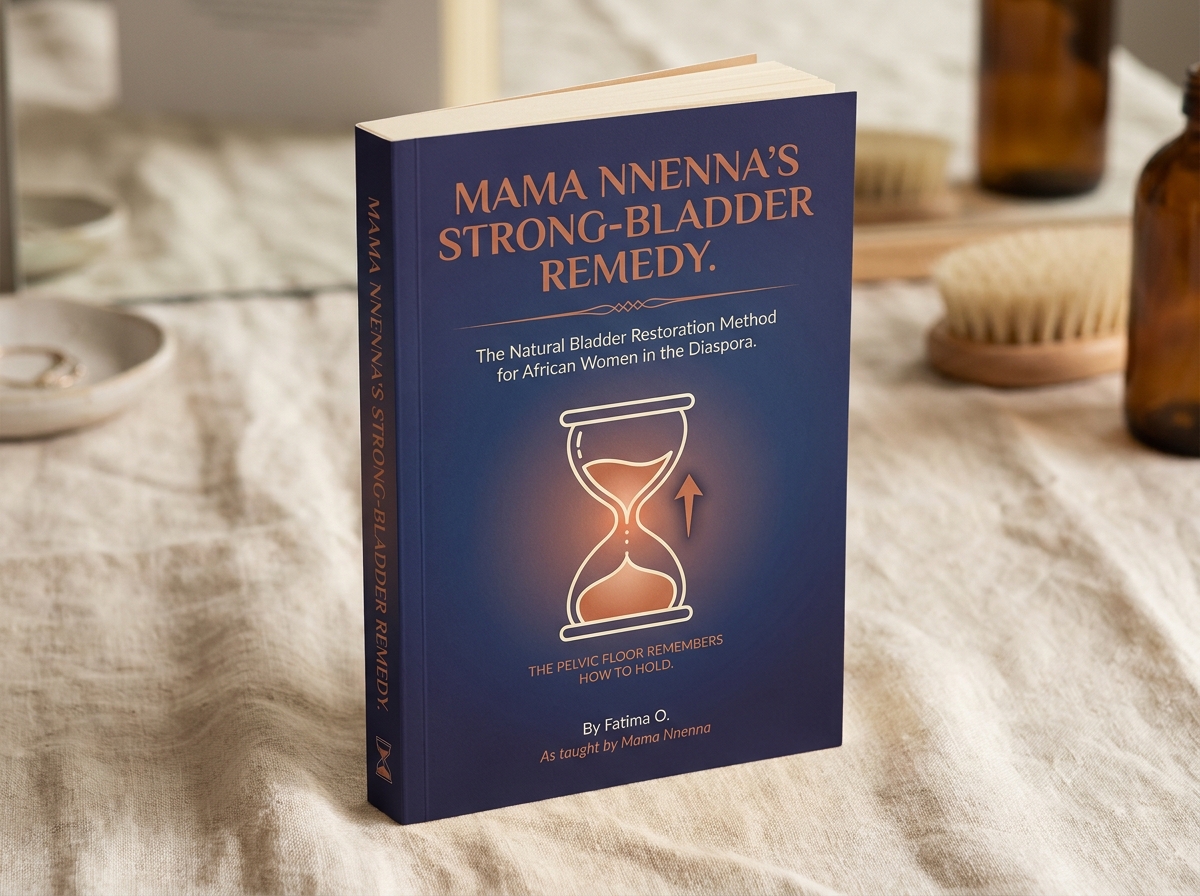
Mama Nnenna's Strong-Bladder Remedy
The Natural Bladder Restoration Method for African Women in the Diaspora
Pelvic floor restoration. Bladder retraining. Traditional botanical support. The pad becomes unnecessary.
What Other Women Are Saying
"4 years. Every morning, the pad. I had restructured my entire life around bathroom proximity. The technique correction was the key: I had been squeezing my gluteal muscles for 4 years, not my pelvic floor. Four weeks of correct technique and the stress leakage during coughing and sneezing reduced by 80%. By Week 8, I had stopped wearing pads to work. I sat in the middle of the church pew last Sunday for the first time in 4 years."
"The urgency was my biggest problem. 30 seconds of warning. No time. I had stopped leaving the house for long periods because the urgency couldn't be managed without nearby toilets. The bladder retraining protocol gave me 12 minutes of warning within 5 weeks. I drove 3 hours to see my daughter last month without planning the route around rest stops. I hadn't done that in 2 years."
"Post-childbirth leakage that never resolved. 7 years. My youngest is now 7 and I have been wearing pads since his birth. Physiotherapy twice — same leaflet both times. The programme's technique verification showed me I had been doing the exercise completely wrong for 7 years. Six weeks of correct technique and I went from 4-5 leaks per day to 0-1. The pad is now a once-a-week precaution, not a daily requirement."
"I had accepted that leaking was what getting older meant for my body. My mother had it. My aunts had it. I assumed it was inherited and permanent. Mama Nnenna's method showed me it isn't inherited — it's a muscle weakness that is common across African women in the diaspora, and it responds to correct training regardless of how long it's been present. Week 3: first dry sneezing episode in 3 years. Week 6: returned to Zumba."
"Same situation as the woman who wrote this story. Teacher. Manchester. Pad every day. Left a gym class in 2023 and didn't go back. The method gave me back what the pad was managing: control. Not just pad-containment. Actual control. I returned to a different gym in Month 2. No incidents. The class instructor doesn't know what happened in 2023. My body knows it won't happen again."
"My GP said 'it's just age, many women experience this.' I spent $200 a month on incontinence products. $200 every month to manage something she told me I should accept. Mama Nnenna's method cost $24.99 once. By Week 6, I was spending $15 a month on products instead of $200. The difference is $185 a month. The shame is gone. The product spend is gone. The life I'd shrunk is expanding again."
Main Method: $80.00 value
Bonus #1 (Pelvic Floor Restoration Plan): $20.00
Bonus #2 (Bladder-Calm Food and Drink Guide): $20.00
Total Value
$120.00
You Pay Today
$24.99
One payment. Lifetime access. Pelvic floor restoration + bladder retraining. The pad becomes unnecessary.
Instant download • Both guides included • 21-day guarantee • Natural. Proven. Private.
Plus: 2 Essential Guides
💪 BONUS #1: The Pelvic Floor Restoration Plan
($20.00 Value. Yours FREE)
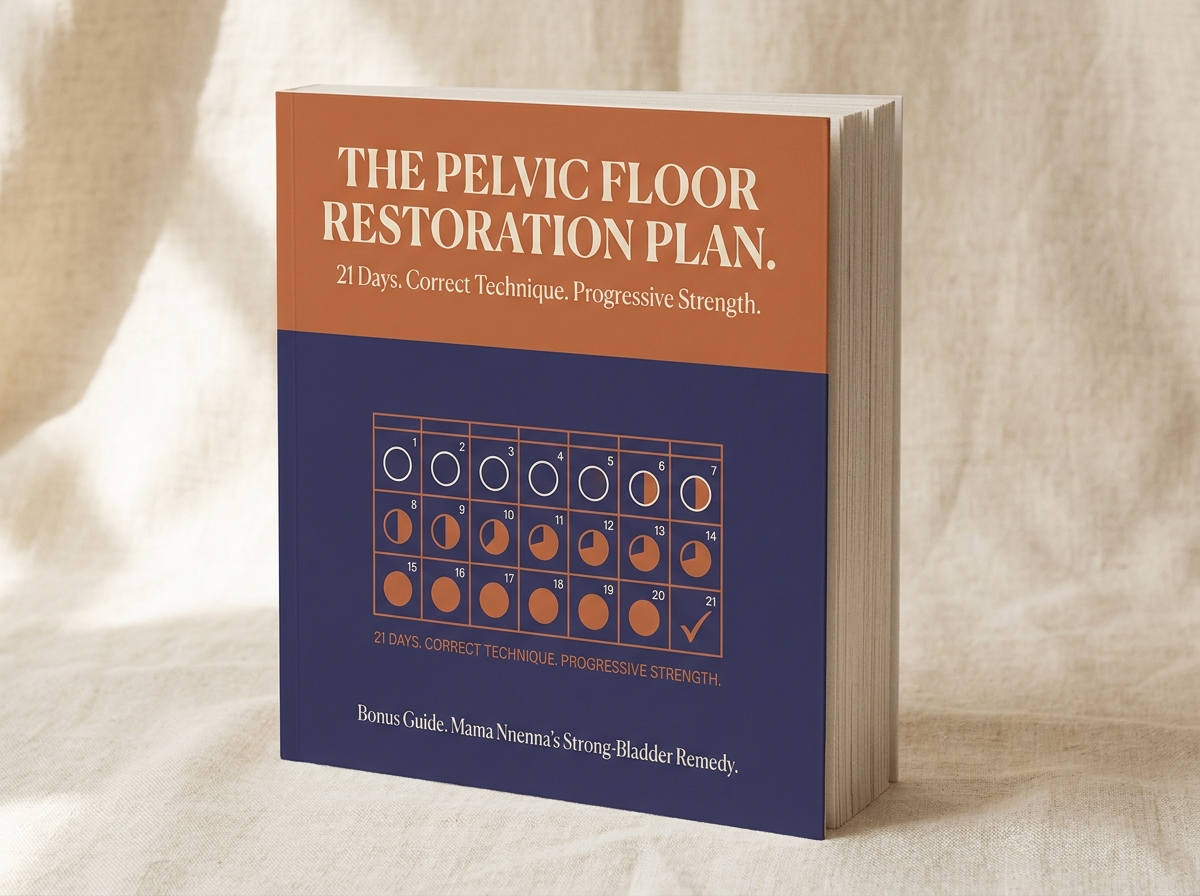
The complete 21-day progressive pelvic floor exercise programme with technique verification at every stage. Day-by-day exercise schedule with progression markers. How to identify whether you are engaging the correct muscles vs gluteal or abdominal muscles. The quick-contraction exercise for stress leakage (coughing, sneezing, laughing). The slow-hold exercise for urgency control. Progressive loading schedule Weeks 1-8.
💪 BONUS #2: The Bladder-Calm Food and Drink Guide
($20.00 Value. Yours FREE)
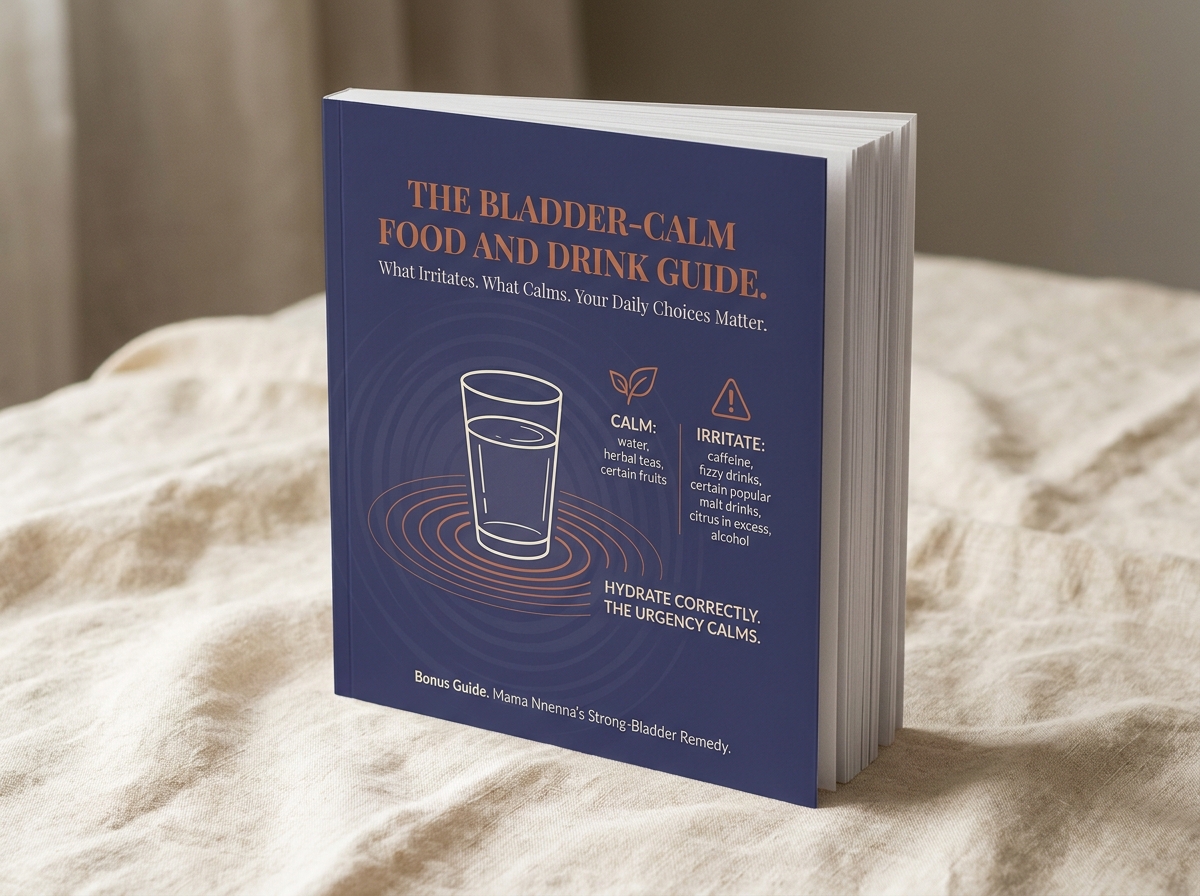
Specific foods and drinks that irritate the bladder and increase urgency frequency (including some you drink daily without knowing). The correct daily water intake that reduces urgency rather than increasing it — and why drinking less water actually makes the problem worse. Which West African foods support bladder calm. Which popular diaspora drinks are among the worst bladder irritants. The daily hydration schedule that supports bladder retraining.
21-Day Conditional Guarantee
Follow the method consistently for 21 days. If you don't notice meaningful reduction in leakage episodes and urgency frequency, full refund.
You keep both guides regardless.
Your bladder control either improves or you pay nothing.
Right Now, You Have a Choice
Another morning putting it on before you know if you'll need it.
Another £40 month on products that contain the problem while it gets worse.
Another social occasion planned around bathroom proximity.
Another exercise class you're afraid to attend.
The pelvic floor doesn't strengthen on its own. The bladder urgency response doesn't retrain without structured practice. The life you've quietly built around the pad gets smaller, not larger, as time passes.
Imagine 8 weeks from now:
You sneeze. You laugh. You jump. Nothing happens.
You sit in the middle of the row. You take the long drive. You return to the gym.
The box of pads in your bathroom lasts a month instead of a week.
$24.99. Once. 21 days of correct practice. The pelvic floor strengthens. The bladder relearns control. The daily secret ends. Not managed. Fixed.
P.S. #1: How many pads did you use this week? At £4-£6 a box, you're spending approximately £35-£45 per month to contain a condition that correct pelvic floor training and bladder retraining can address. $24.99 once, or £40+ every month indefinitely. The pad isn't a solution. It's a subscription to managing a problem that has a remedy.
P.S. #2: Research published with NIH citation found women managing incontinence spend an average of $750 annually on products. That is money spent on containment, not cure. The method costs $24.99 once. The saving over one year is over $700. The gym you stopped attending, the long drives you declined, the social occasions you restructured — those have a cost that doesn't appear on a bank statement but has been accumulating for years.
P.S. #3: Mama Nnenna is 74. She spent 40 years as a midwife watching women accept bladder leakage as an inevitable consequence of age and childbirth. "The pelvic floor is a muscle," she says. "No woman accepts that her arm muscles weaken with age and does nothing. But she accepts that her pelvic floor weakens and buys pads. The muscle responds to training at any age. The bladder retrains at any age. The leaking is not what getting older means. It is what getting older means when nobody told you it could be fixed." $24.99 to be told it can be fixed. And to fix it.